
In October 1818, Mikołaj Chopin brought his eight-year-old son Frédéric Chopin to work, hoping he’d get the chance to meet a member of the royal family.
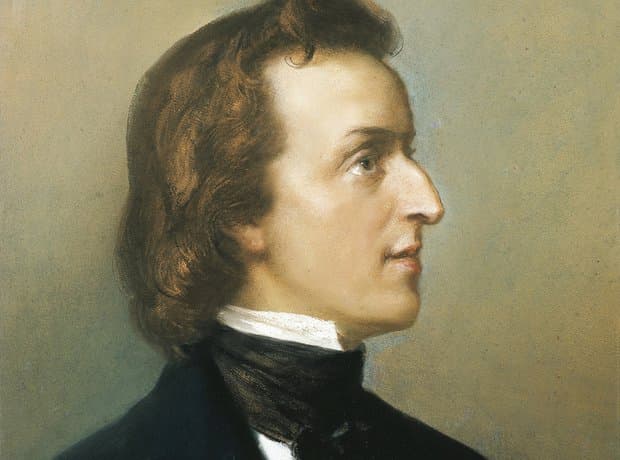
Frédéric Chopin © ClassicFM
Mikołaj was a teacher, and Tsarina Maria Feodorovna, the mother of the Russian Tsar, was visiting his school.
During the visit, Frédéric did indeed meet the tsarina. He presented Maria Feodorovna with the manuscripts of two dances that he’d recently written.
Soon afterward, little Frédéric was summoned to the Brühl Palace in Warsaw by the tsarina’s younger son: the cruel and impulsive Grand Duke Konstantin Pavlovich of Russia.
Grand Duke Konstantin: The Origins of A Cruel and Dangerous Leader
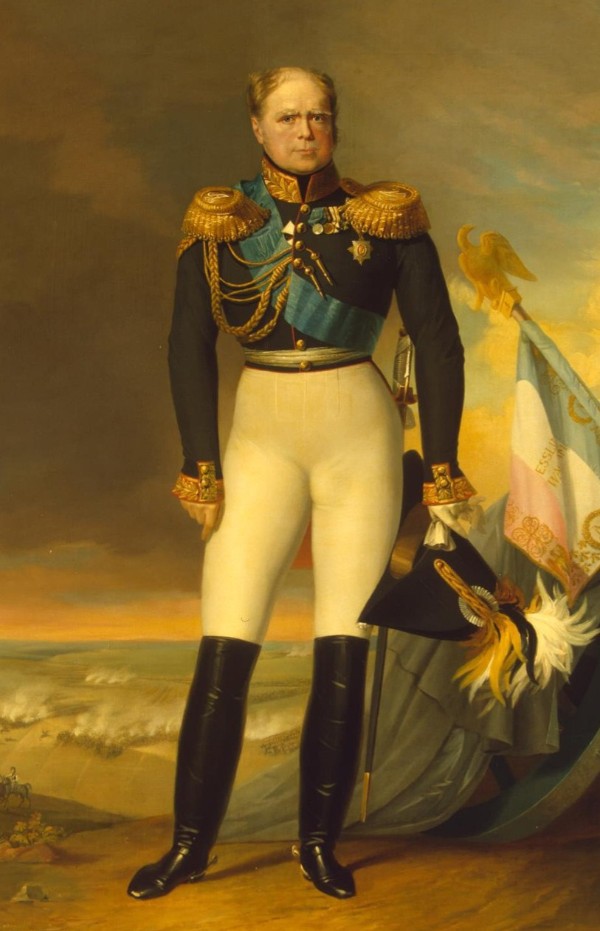
Grand Duke Konstantin Pavlovich of Russia
Konstantin was born in 1779 in Tsarskoye Selo (the Tsar’s Village), just outside of St. Petersburg.
From birth, his grandmother Catherine the Great took control of Konstantin’s life. She dictated every aspect of his life: his upbringing, his education, even his name.
Catherine wanted to toughen up Konstantin and his older brother. The boys were forced to bathe in cold water, sleep on hard beds, and live in darkness, in temperatures below 15 degrees Celsius (59 degrees Fahrenheit).
Grand Duke Konstantin Konstantinovich — Rare photos from the Russian Archive
His Doomed Marriage
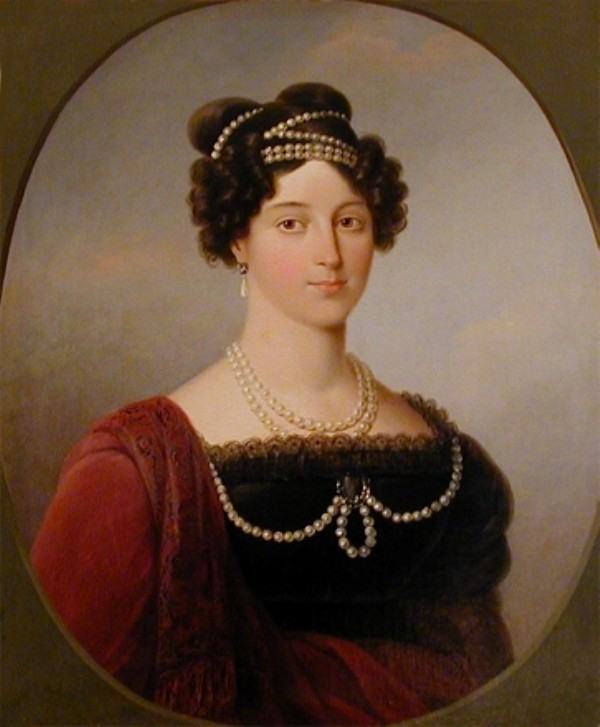
Princess Juliane of Saxe-Coburg-Saalfeld
She also controlled his love life. When he was sixteen, Catherine forced him to marry the fourteen-year-old Princess Juliane of Saxe-Coburg-Saalfeld.
Konstantin wasn’t interested in marriage but ultimately relented. He said of his marriage and future wife, “If it must be so. I will marry the little ape; it dances very prettily.”
Not surprisingly, Konstantin had grown up to become a terror: rebellious, erratic, and increasingly violent. He abused his wife in every possible way, and her health suffered dramatically.
In 1799, three years after their marriage, she returned to Germany. Her family, fearing scandal, forced her to return to Russia, but in 1801, she fled home for a final time, flatly refusing to ever return again.
Konstantin Takes Charge of Poland
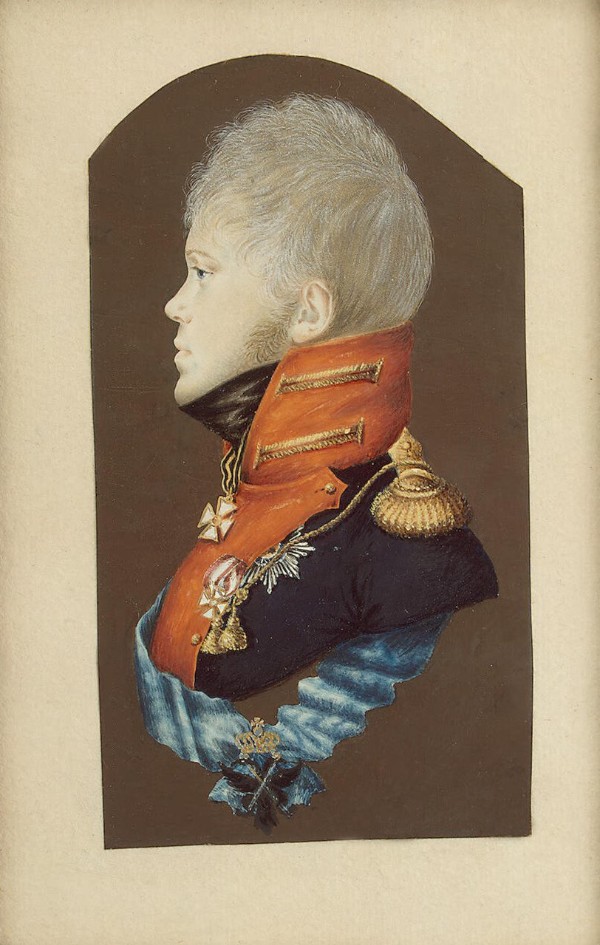
Grand Duke Konstantin Pavlovich of Russia
During the Napoleonic wars, Konstantin alternated between incompetence on the battlefield and feats of personal bravery. His treatment of his own troops and French troops was infamously cruel.
After the Congress of Vienna of 1814-15, which sought to establish a peace plan for Europe after the Napoleonic Wars, his older brother, now Tsar Alexander, put Konstantin in charge of Poland, which became a puppet state of Russia.
Under Russian rule during this time, Poland was forbidden from controlling its own budget, military, and judiciary system. After meeting resistance, Alexander suspended the Polish parliament for five years and gave Konstantin authority to rule over the Polish people.
Konstantin, with his natural bent toward cruelty and authoritarianism, did everything he could to suppress additional dissent. He supported the secret police and replaced Polish officials with Russian loyalists.
He also became known for drilling the Polish army for shifts that would last for twenty-four hours. These drills would kill men, as well as their horses. Those who survived could be publicly flogged, at Konstantin’s whim.
Konstantin’s Second Marriage
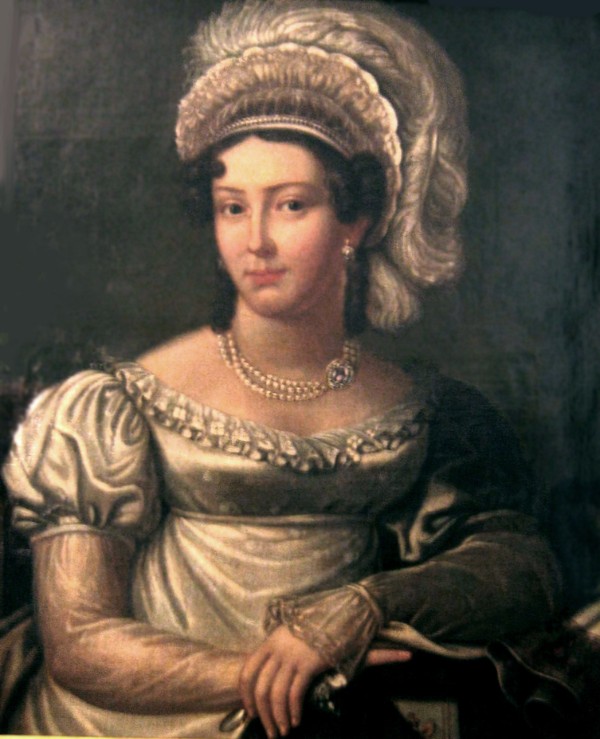
Joanna Grudzińska
In 1820, two years after young Frédéric Chopin was first summoned to perform for Konstantin, his marriage was finally annulled, and he was free to marry again. He married a Polish countess named Joanna Grudzińska, who had been his mistress for five years.
Upon her marriage, Joanna Grudzińska was granted the royal title of Princess Łowicka. She gained a reputation as “the guardian angel of Poland” because she advocated for her homeland to her husband.
Konstantin’s Support for the Arts…and Young Chopin
Despite his martial image, Konstantin was also a supporter of the arts.
For instance, Konstantin was a big fan of a particular military march that Chopin wrote as a child. Konstantin took the score and had it arranged for military band, then would order it to be played when he drilled soldiers. It must have been a bewildering experience for the young composer.
In 1822, Konstantin and his court moved to the Belweder Palace just outside of Warsaw. Princess Łowicka often invited Chopin there. She believed that Chopin’s piano playing calmed the erratic moods of her ruthless husband. Obviously, this was a heavy responsibility for a child to carry!
During his visits, Chopin befriended Konstantin’s illegitimate son Paul, who lived in the palace. (His mother was not Princess Łowicka.) Paul began showing up personally with his French tutor at the Chopins’ apartment in his royal carriage to pick Frédéric up.
Frédéric also befriended the daughter of that tutor. He would walk with her in the palace gardens after his performances. She nicknamed him “a little devil” and would accept kisses from him.
He started giving her piano lessons, and in 1826, he dedicated his Rondo à la Mazur, op. 5 to her.
Chopin: Rondo à la mazur in F major, Op. 5
The November Uprising Begins
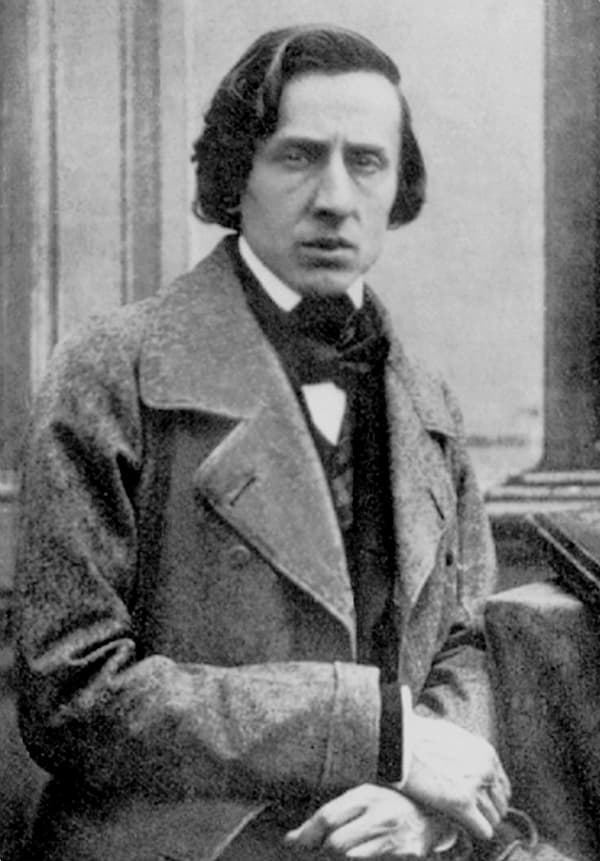
Frédéric Chopin in 1849
In late 1830, Chopin left Warsaw to make a name for himself as a piano virtuoso.
Almost as soon as he left, news arrived that Polish revolutionaries were mounting a rebellion against their Russian rulers. This uprising would become known as the November Uprising.
The revolutionaries began when forces attempted to storm the Belweder Palace, albeit unsuccessfully. They had some early successes in their wider campaign, but ultimately were crushed.
The Impact of Konstantin and the November Uprising on Chopin
Conditions in Warsaw became more oppressive than ever, and as a result, Chopin never felt comfortable returning home.
Instead, he lived in permanent exile in France, forever yearning for his friends, family, culture, and homeland. This bitter yearning colored his melancholy music, which was often full of references to Polish rhythms and harmonies.
Chopin: Mazurka in B minor, Op. 33 No. 4
His early relationship with Konstantin also presaged another important aspect of his career: his comfort interacting with the aristocracy and earning money teaching and performing for them.
Those early performances for the tyrannical Konstantin served him well; they prepared him to be at ease in palaces among powerful people. Later in life, he made a living teaching wealthy aristocrats in Paris.
Konstantin retreated to present-day Belarus, leaving Poland to deal with its insurrection. He died of cholera in 1831 before he could see the conflict through.
For more of the best in classical music, sign up for our E-Newsletter





Bruce Liu is astonishing. Incredible feel for the music, amazing touch and nuance with every keystroke.