The life of a choir nun in 16th-century Italy centred around musical prayer. There may have been other duties to attend to, such as the vineyard or spinning, but the focus of the day was the Divine Office. The day would begin with Lauds at 6 am, Terce at 9 am, Sext at the noon lunch break, and None at 3 pm, when one returned to work, and then, at the lighting of the evening lamp (Vespers), at bedtime (Compline), and, finally, at midnight.
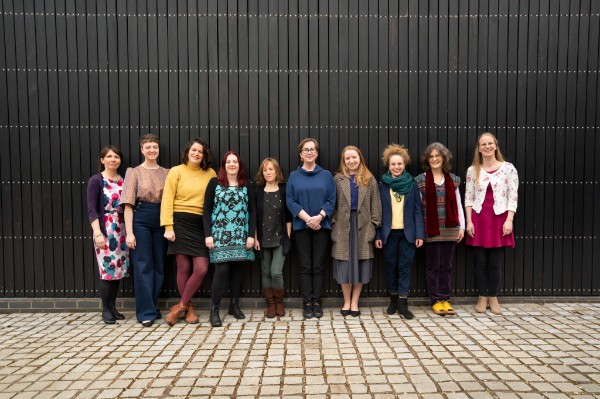
Musica Secreta (photo by Nick Rutter)
The music on this new recording by Musica Secreta comes from the convent of San Matteo in Arcetri, located in the hills south of Florence. Although the convent is now a private villa, the church still remains, and the convent, now attached to it, was the former stables. The church began as a hospice in 1240, founded by the Augustinians; the convent began in 1269. The Augustinians were succeeded by the Poor Clares and, after 1897, by the male order of the Discalced Carmelites, who moved from the centre of Florence.
Two of the best known of the nuns in the convent were the sisters Livia and Virginia (1600–1634), daughters of Vicenzo Galilei, who had a house in the neighbourhood, the Villa Il Gioello, just a few meters away from the convent. The sisters entered the convent in 1613. We know of Virginia’s life at the convent through the 124 letters she wrote to her father until he was taken to Siena in 1633 to serve the house arrest that was the verdict following his trial for heresy for believing in a heliocentric universe.
The music of the convent is preserved in the Biffoli-Sostegni manuscript, MS 27766 of the Library of the Royal Conservatory in Brussels. The book is a large A3-size paper volume bound in leather. The manuscript was created in 1560 on commission from two nuns, Clemenza di Sostegni and Angioletti di Biffoli, who came from prominent Florentine families. Their names are stamped on the cover, and their family coats of arms appear on folio 23. ‘Tiny illustrations attest to the bond between the nuns, their initials entwined in the elaborate filigree letters that adorn each page, with miniatures of singing nuns peering out from the decorations’. The music in the 166 folios of the book is anonymous, but it does contain single pieces by composers such as Compère, Festa, and Willaert. The copyist, Antonius Morus, included his name in one of the initials and added the coats of arms of the two commissioners on one page.
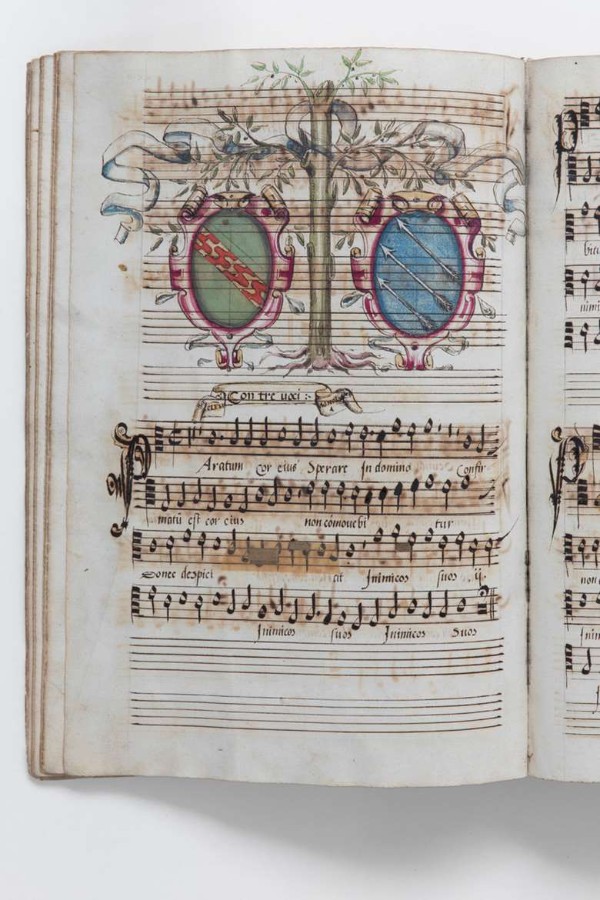
Biffoli-Sostegni manuscript, MS 27766, f. 23v (Brussels: Library of the Royal Conservatory)
Although we associate the music from religious institutions with plainchant, it’s clear from this manuscript that polyphonic music was also performed. The nuns were not free to do as they wished. There was regulation of music by the Archbishop of Florence, Alessandro de’ Medici (Archbishop from 1574–1596; later the short-lived Pope Leo XI) (1535–1605), who restricted the styles of music that nuns could use for worship: ‘he prohibited convents from using the new “concertato” styles of solo voices with violins and instruments, permitting only older-style polyphony with organ and viols, and solo voices accompanied by the organ – as long as they sang in Latin’ (all quotes from the liner notes). In terms of general music making, the Biffoli-Sostegni manuscript would have been full of old-fashioned music, but at the same time, it was still a valuable source of music that could be performed. Many of the pieces of music were for special holidays of the church, such as the Mass of Thanksgiving commemorating a lightning strike in 1541. This Mass of the Immaculate Conception was still being sung in 1694, more than 150 years later.
The research behind this manuscript was done by the director of Musica Secreta, Laurie Stras. Her work transformed the manuscript from something interesting but of unknown provenance to securely placing it at the Poor Clares convent in Arcetri and associating it with known Florentine families.
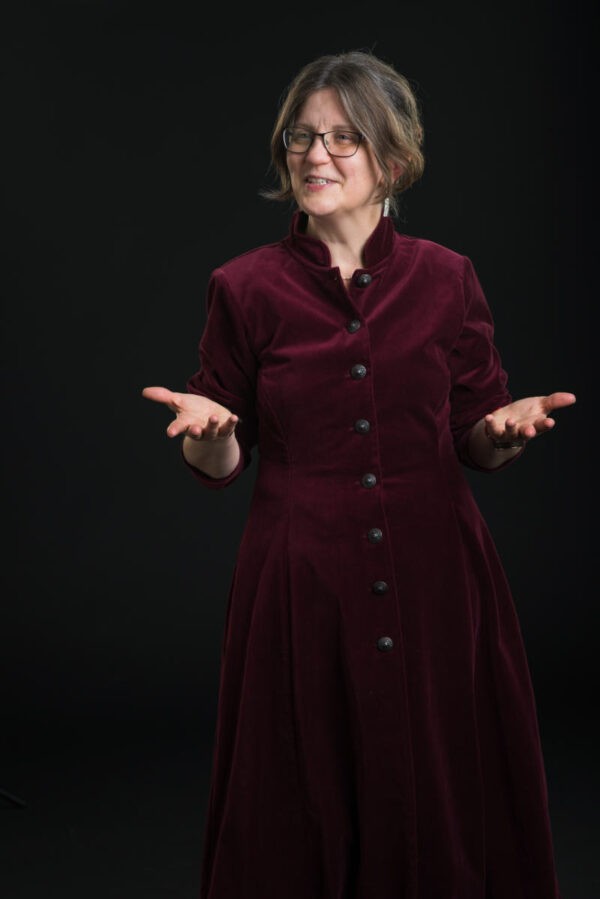
Laurie Stras (photo by Andrew Mason)
As Dr Stras points out, the music for worship was always supplemented by private music making. Galileo sent his daughter a chittarone, a kind of large lute we know today as a theorbo (many of her relatives (her grandfather, father, uncle, brother, and male and female cousins) were all expert lutenists), which we know from their correspondence that she returned to him.
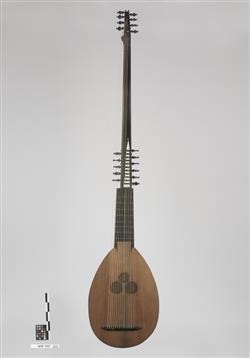
Chitarrone (Germanisches National Museum)
The music on the album includes both sacred mass music and vespers psalms, and also settings of poetry by Francesco Petrarcha and the 15th-century poet Benedetto Cingoli. These are very madrigal-like in their construction, and because they wouldn’t have been sung in services, Stras has recorded them with lute accompaniment.
The mass is based on Antoine de Févin’s song Je le lerray puisqu’il me bat, a curious choice because the source song is about the complaints of a woman who says she will leave her man because he beats her for going out and having fun (I shall leave him, because he beats me, ah God, alas. And the dirty and bad-tempered villain has made up a story about me, that I was gone out to have fun….). This song is not in the Biffoli-Sostegni manuscript but was found in a collection in the Florence Central Library (MS Magliabechiano, XIX.117, 6v–7r.), showing that it was a local source for the mass.
Antoine de Févin: Je le lerray puisqu’il me bat
You can hear the distinctive opening lines from the canzona in the opening of the mass Kyrie. The immediate rise in register means that this music was written for women.
Messa sopra Je le lerray: Kyrie
This kind of clarity works throughout the recording. Without beating you over the head with the historical research, Stras uses the music to present her ideas about the role of women in the church, the role of music and women, and how far the parameters could be stretched to create something beautiful.
Musica Secreta is a long-established female-only early music ensemble, founded by Deborah Roberts in 1990. She was joined by Laurie Stras as co-director in 2000 and became sole director at Roberts’ death in 2024. With 30 years’ experience in early music performance, Musica Secreta brings a polished edge to a genre that is too often sidelined by more extravagant forms.
The recording launch is 1 October 2025, and the recording will be performed live at the Brighton Early Music Festival on 19 October 2025.
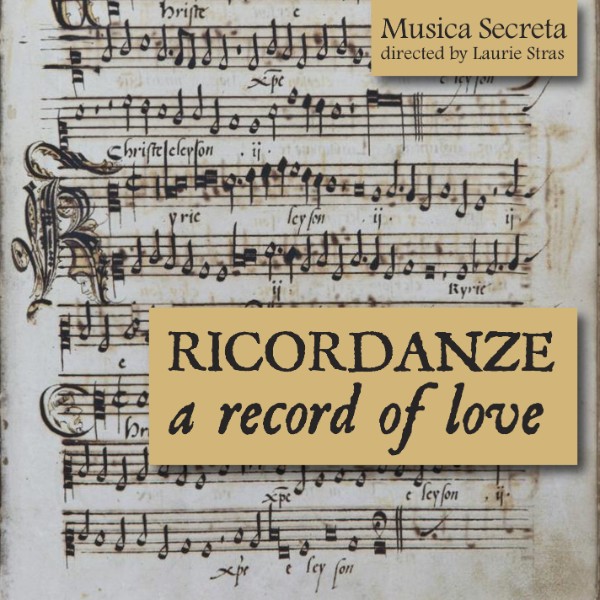
Ricordanze: A Record of Love
Musica Secreta, directed by Laurie Stras
Lucky Music LCKY005
Release date: 1 October 2025
Pre-order and download at:
https://musicasecreta.bandcamp.com/album/ricordanze-a-record-of-love
https://musicasecreta.org/product/ricordanze-a-record-of-love.
For more of the best in classical music, sign up for our E-Newsletter